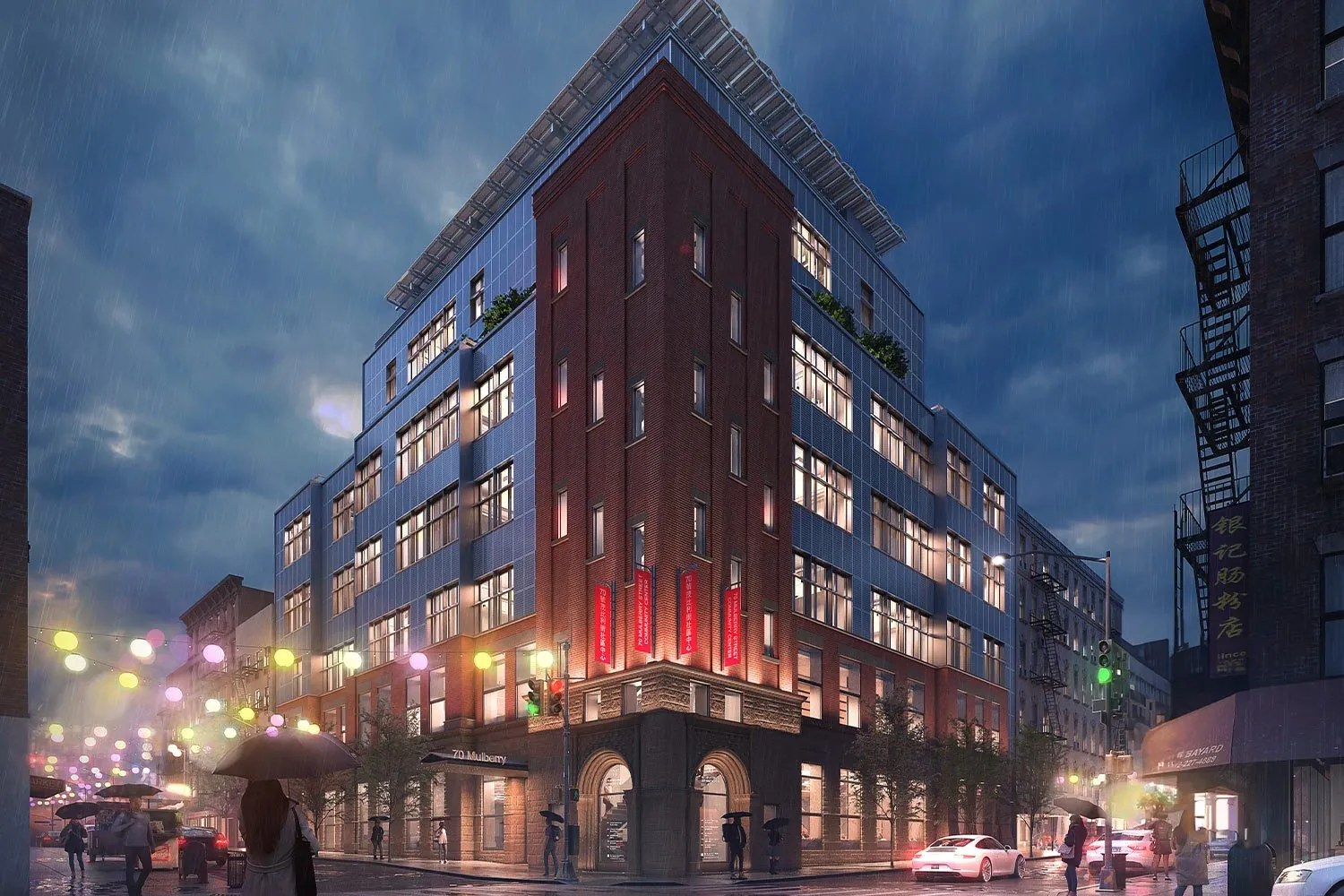
The city broke ground on Monday on a $184 million reconstruction of 70 Mulberry Street, the former Public School 23 building in Chinatown that a fire badly damaged in January 2020, displacing five community organizations that had called it home for decades. Mayor Zohran Kwame Mamdani was joined at the groundbreaking by Design and Construction Commissioner Paul A. Ochoa, Citywide Administrative Services Commissioner Yume Kitasei and Cultural Affairs Commissioner Diya Vij, according to the mayor's office.
"70 Mulberry Street captures the history and hopes of the Chinatown community," Mamdani said in a statement released by his office. "For generations, this building has been a place where neighbors gathered, where seniors found community and where cultural organizations kept this neighborhood's traditions alive."
The five story building was designed by C.B.J. Snyder and constructed in 1892 as Public School 23. After the school closed in the mid 1970s, it became a community center housing five organizations: the CPC Chinatown Senior Citizen Center, the United East Athletic Association, the Chen Dance Center, the Museum of Chinese in America and the Chinatown Manpower Project. A fire on January 23, 2020, significantly damaged the building, and the five organizations have operated at reduced capacity from interim locations since then, according to the city.
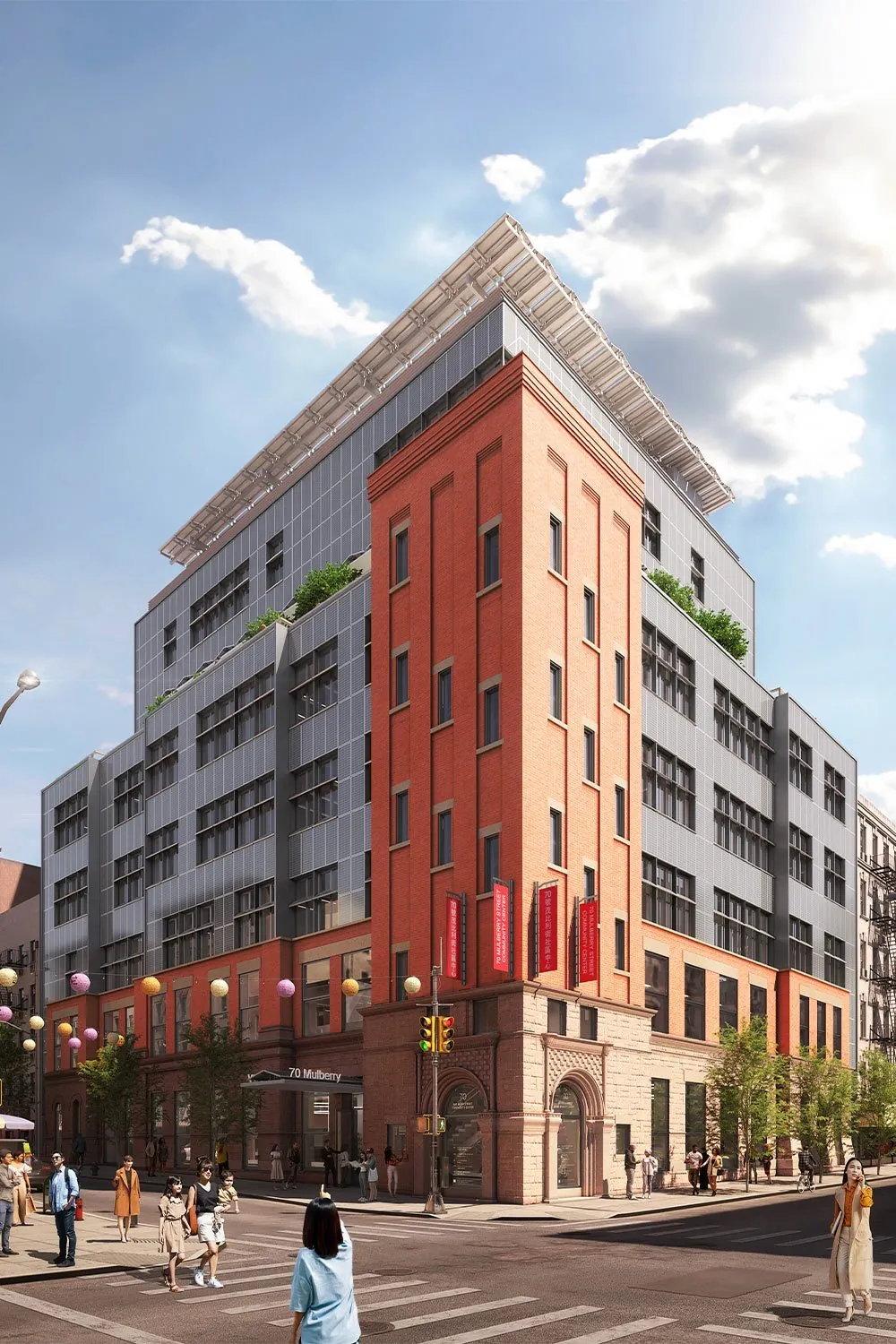
The replacement is an eight story cultural hub that expands the public space of the original building by about 30 percent. The project keeps the old building's historic stairwell along with two stories of its street facade, and the new building will include six community rooms, a new kitchen serving the senior center, and a multipurpose room on the sixth floor overlooking Columbus Park, connected to landscaped outdoor terraces along Mulberry and Bayard Streets. Together, the spaces will accommodate up to 475 people. Buro Happold, the project's engineering firm, says the new building will be a free standing structure that braces the surviving historic facades, returning 51,000 square feet to the five nonprofits and adding 16,500 square feet of community space.
The building will be all electric, with three elevators, a new lobby and accessible restrooms making it fully compliant with the Americans with Disabilities Act. A rooftop solar canopy and solar panels integrated into the facade are expected to generate up to 410 megawatt hours of electricity a year, meeting up to 30 percent of the building's annual demand, and the city projects the building will consume under half the energy of a comparable new commercial building built to current efficiency standards. The release says the project is expected to achieve LEED Platinum certification, and Buro Happold also records the design as tracking toward LEED Platinum.
The building will carry Wings of Everchange, a three part public art installation by Jennifer Wen Ma commissioned through the Department of Cultural Affairs' Percent for Art Program, which selected Ma for the commission in 2023. Its centerpiece is a suspended sculpture about 33 feet long, made of metal, glass and objects salvaged from the 2020 fire, and its amber glass orbs will hold memories and stories about the building, forming an oral history archive developed with the community. "I cannot wait to unveil Everchange, a three-part public artwork co-created with the very community that will re-inhabit this space and revitalize our neighborhood," Ma said in the release.
The Design and Construction Department is delivering the project with the design firm Grimshaw and the construction manager Hunter Roberts Construction Group, and the city says the job is the first time the department has used the Construction Manager-Build delivery method outside library projects and emergency situations. Construction is expected to be completed in 2030.