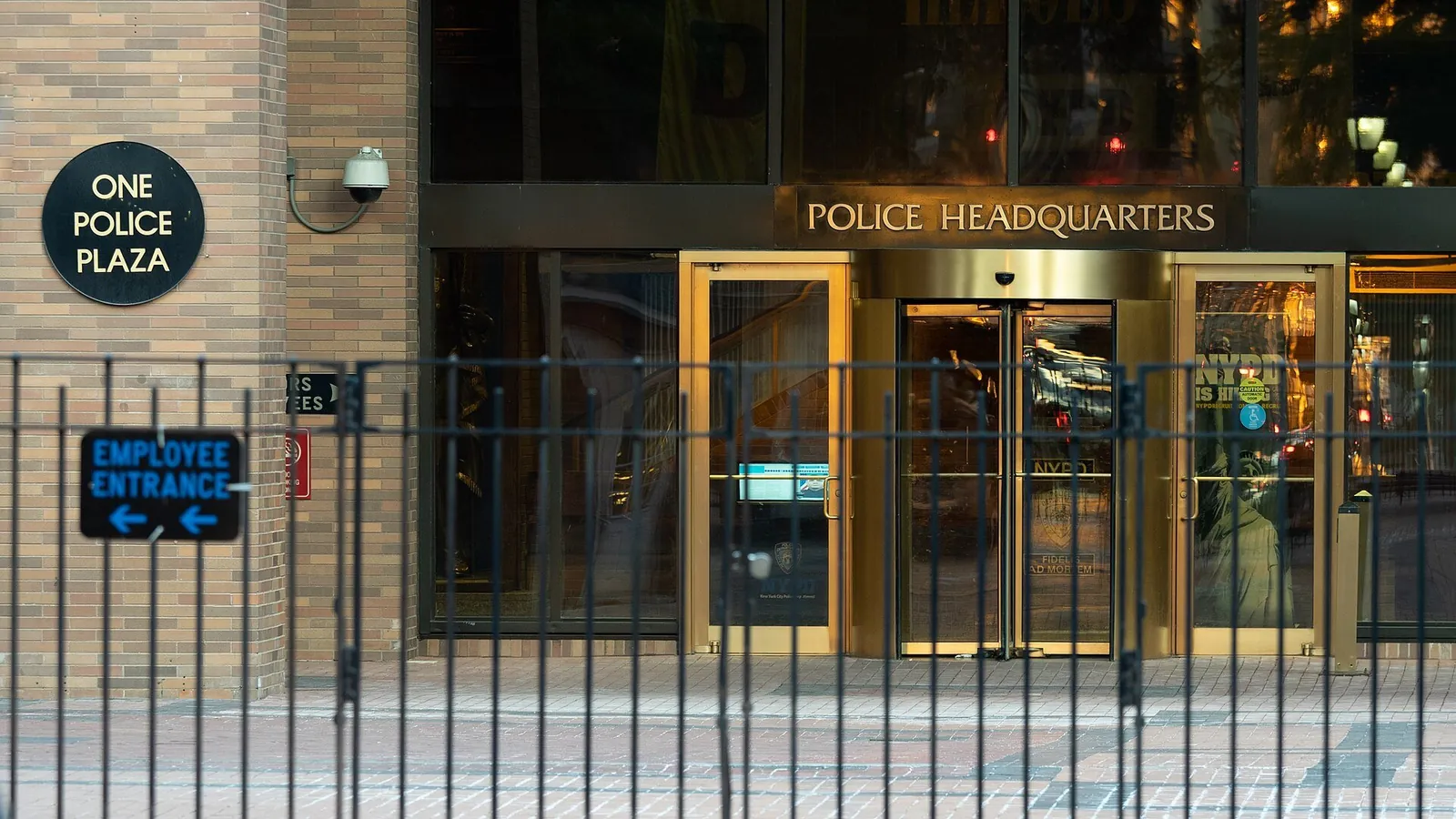
The NYPD's Strategic Response Group will be disbanded, Mayor Zohran Mamdani and Police Commissioner Jessica Tisch announced on Monday, in a restructuring that removes protest response from the specialized unit and rebuilds it around dialogue teams, a civilian division and new limits on crowd control tactics.
"During our campaign, I promised New Yorkers that we would disband the Strategic Response Group and separate counterterrorism from protest response, and today we are delivering on that promise," Mamdani said. "New Yorkers exercising their constitutional right to protest should not be met with the same police response as a terrorism threat. We are establishing a new, civilian-led approach that prioritizes dialogue, engagement and de-escalation."
The center of the new structure sits outside the police department. A Community Dialogue and De-escalation Division, described by City Hall as the first of its kind, will sit inside the Mayor's Office of Community Safety and take the lead on how the city prepares for demonstrations and handles them when they happen. Its members will carry no weapons and will hold no arrest powers.
Inside the NYPD, a First Amendment Support Team of 30 uniformed officers, based in the Community Affairs Bureau, will handle dialogue work while the civilian division is being established. The officers are to be trained in communication and de-escalation, and the two teams are to coordinate before and during First Amendment activities.
Arrests and crowd management fall to a third body, a Patrol Support Division inside the Patrol Services Bureau. Its officers will be vetted, will receive specialized crowd management training, and will spend most of their time on ordinary patrol support, including searches for missing persons, major events such as the New York City Marathon and the Thanksgiving Day Parade, and priority traffic posts in hazardous weather. At protests, the division will conduct arrests only in rare instances if necessary, and entry will carry strict eligibility requirements.
The announcement also rewrites the tactics rulebook for every officer at a protest. Kettling is formally prohibited, as are long guns and tear gas during First Amendment activities. Pepper spray will not be used as a crowd management tool, long-range acoustic devices are capped at 90 decibels, and an officer may use a bicycle as a weapon only when necessary to prevent death or physical injury.
What the SRG did away from protests stays inside the department. Its counterterrorism work, including heavy weapons deployments at critical infrastructure, will be consolidated in the Intelligence and Counterterrorism Bureau, so that protest response and counterterrorism sit in separate chains of command.
"Today, we announced a new structure designed to consolidate our counterterrorism capabilities, provide greater support to our patrol officers and ensure we continue to respond to protests consistent with public safety and the First Amendment," Tisch said. "These changes will make us a stronger, more effective department."
City Hall said the work on the changes began in January, that they will be carried out at no additional cost and without increasing or reducing NYPD headcount, and that the package delivers the core of the CURB Act, the bill by Councilmember Chi Ossé that the mayor says he is glad to back.
The unit was created in 2015 with a counterterrorism focus and was frequently deployed to protests, where its tactics drew years of criticism and lawsuits. After the protests that followed the death of George Floyd in 2020, a city watchdog found the department had engaged in excessive enforcement and recommended that officials reevaluate the central role of the SRG in protest response.
The Police Benevolent Association, the department's largest union, attacked the announcement, arguing that it puts public and officer safety at risk. City Hall gave no completion date for the wind-down in its statement; the First Amendment Support Team is the piece in place while the civilian division is built.