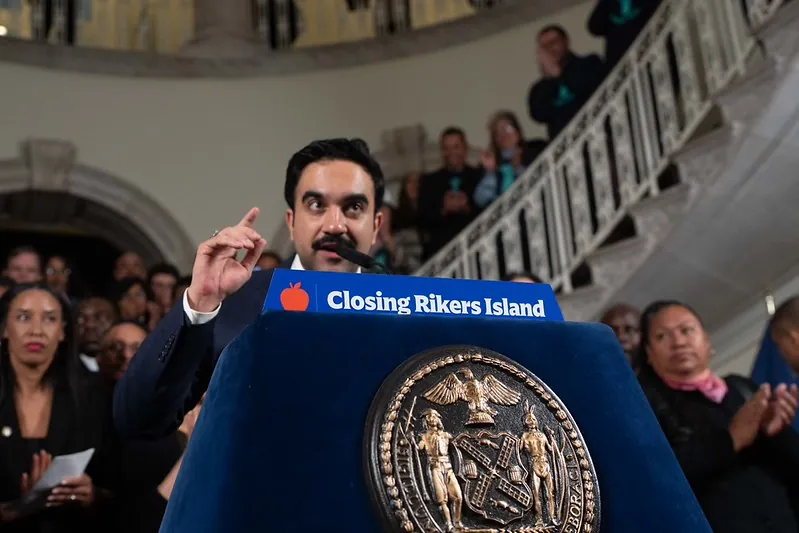
Nearly three quarters of classes in New York City public schools now sit at or below the state's class size caps. Mayor Zohran Kwame Mamdani and Schools Chancellor Kamar Samuels announced on Friday that 73.4 percent of classes comply with the state class size law, surpassing the state's 70 percent target for the 2026-27 school year.
The school level numbers moved with the citywide rate. An additional 133 schools are now fully compliant, doubling the number where every class meets the limits, the mayor's office said. More than 640 schools have reached at least 90 percent compliance, more than 1,120 schools have reached at least 70 percent, and the number of schools at or below 50 percent compliance has fallen by more than 230. The city said it reached those figures without relying on exemptions.
"The days of overcrowded classrooms and students struggling to get the attention of their teachers are coming to an end," Mamdani said in the announcement. "Today, we are delivering on our promise to make smaller class sizes a reality for more New York City kids." Samuels, in the same release, said: "Together, we have reached 73.4% compliance, exceeding the state's target and making our students' day-to-day classroom experience more rigorous, engaging and personalized."
Two changes frame the milestone, and neither appears in the mayor's release. First, the target moved: state lawmakers agreed in June to give the city more time, setting this year's requirement at 70 percent instead of the original 80 percent, with full compliance now due by the 2029-30 school year, Chalkbeat reported. Second, the count widened: for the first time the city counted elementary school cluster classes, subjects such as science, art, physical education and music that are not taught by a student's usual classroom teacher, and it also began counting middle and high school exam prep courses. Chalkbeat reported that Samuels said the compliance rate without the cluster classes would have been 69.5 percent, just under the lowered target.
The money behind the effort is stated in the release. A $244 million investment in teacher hiring sits in the administration's budget, alongside $1.5 billion in new capital funding for future compliance. With the new money, capital funding aimed at smaller classes passes $7.6 billion in total, enough, the mayor's office said, to build 41,000 seats in smaller classrooms. Chalkbeat, citing city officials, put the hiring at about 1,900 teachers funded last spring, and noted that the overall teacher headcount nonetheless edged down, from about 69,900 to about 69,400, while remaining about 5,000 above the level of two years ago.
Compliance rose in every grade band, the mayor's office said, led by middle school, up 7.2 percentage points. Fourth and fifth grades rose 6.4 points, kindergarten through third grade rose 4.9 points and high school rose 4.8 points. Among classes still over the caps, just over one third exceed the limit by only one to three students, and the share exceeding it by six or more students has fallen from 17 percent to 12 percent.
School Construction Authority President Celeste A. Ramirez, who joined the announcement, said in the release that surpassing the 70 percent threshold is an important milestone but that the work is far from finished. Chalkbeat reported that nearly 500 schools still lack the space to bring every class under the caps, and that district results ranged from 92 percent of classes under the caps in District 32 in Bushwick to 56 percent in District 26 in northeast Queens. Next year's target, under the revised schedule, is 80 percent.