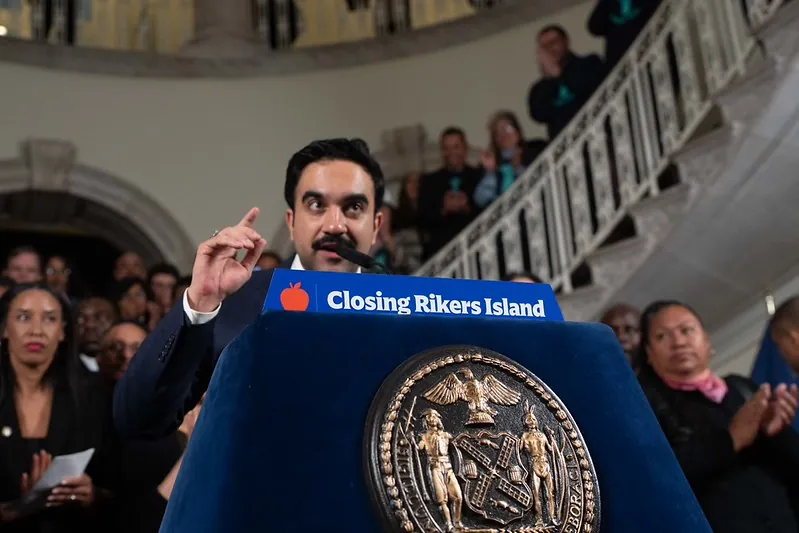
Mayor Zohran Mamdani released the city's first comprehensive plan to close Rikers Island on Friday, setting the end of 2032 for the jail complex to shut and asking New Yorkers to accept a timeline five years beyond the closure deadline the Council wrote into law for next year.
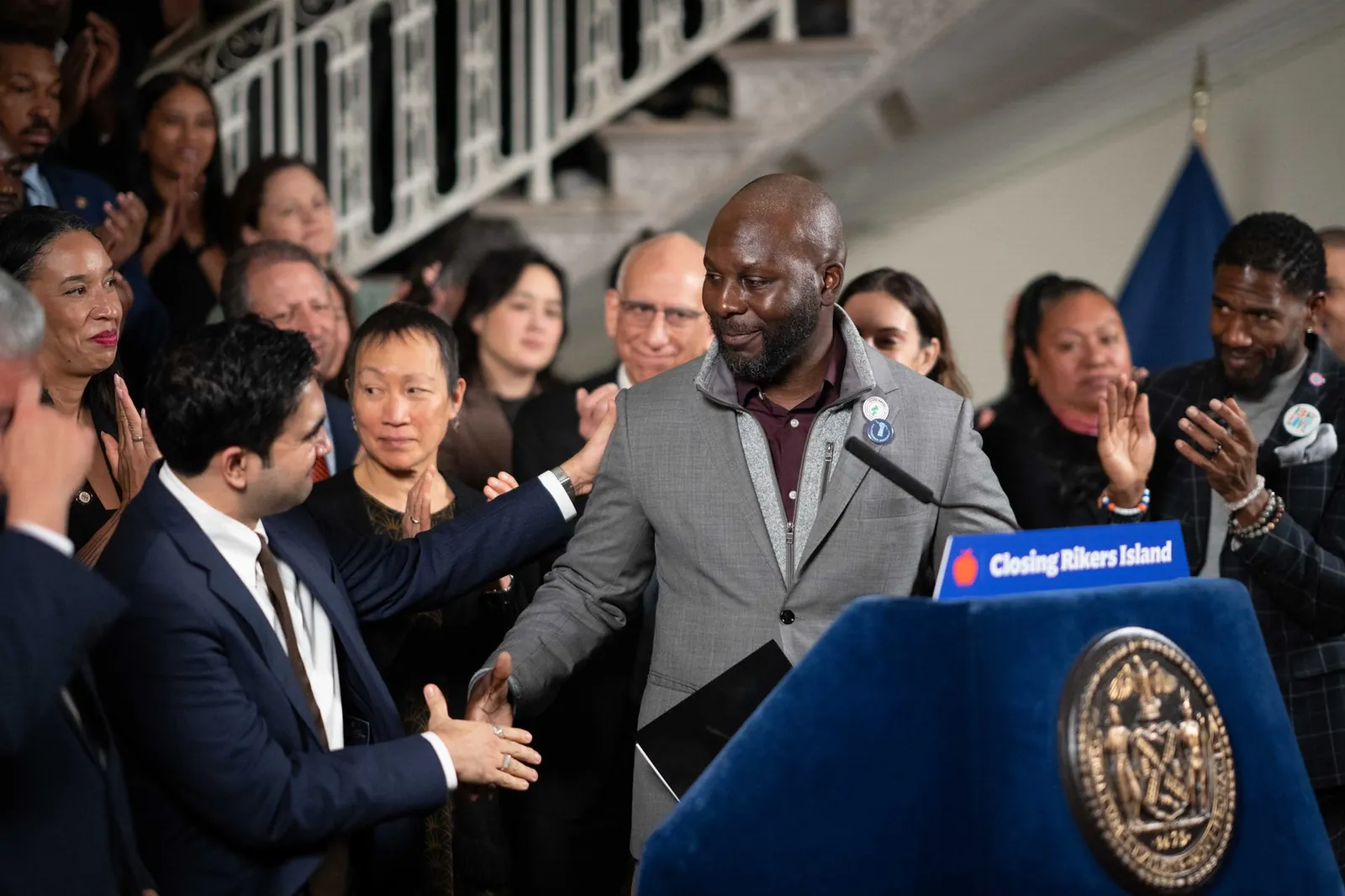
"It is time to finally close Rikers Island," Mamdani said. "For decades, New Yorkers have demanded a correctional system that is safe and humane. This plan puts us on a path to deliver just that: closing Rikers, reducing pretrial detention, tackling the case delays that deprives people of their right to a speedy trial and investing $146 million in evidence-based supports that help break the cycles of incarceration."
The plan, titled Close Rikers: Strategic Plan, replaces the island complex with four borough-based jails to be open by the end of 2032, the mayor's office said. The Brooklyn facility opens first, in 2029, and the other three open over the following three years, according to the plan as reported by Reuters. The new jails are sited closer to courthouses, public transportation and the communities where people in custody live, with fewer beds per housing unit, individual cells, dedicated space for classes and vocational training, outdoor access for every housing unit and at least 20,000 square feet of community space in each facility. Women in custody will be centralized at the Queens facility, near Elmhurst Hospital.
In conjunction with the plan's release, legislation will be introduced in the Council to reset the date by which incarceration on the island must end, so the law matches the construction schedule, the mayor's office said. "Delays under previous administrations have made it clear that more time is needed to fulfill the commitment the City Council made to New Yorkers in 2019 when we legislated closing Rikers Island," said Council Speaker Julie Menin. Reuters reported that Mamdani acknowledged at his press conference that the Council had ordered the facility closed by next year and said the later timeline was necessary because of his predecessor's delays. The plan was developed in consultation with the federal remediation manager now overseeing the jail, Reuters reported.
The jail population has to shrink for the smaller borough jails to hold it. Reuters reported that Rikers currently holds about 6,600 people and that the plan calls for the population to drop to 5,500 by 2029, when the Brooklyn facility opens, and to reach 4,100 by 2032, through alternatives to incarceration, faster legal processing and reduced case backlogs. The Mayor's Office of Criminal Justice, summarizing the same plan, said it includes $30 million in immediate investments in fiscal 2027 and $260 million in planned investments through fiscal 2030 aimed at diversion at arraignment, targeted release after initial detention, reduced case delay and lower recidivism.
For people whose needs a jail cannot meet, the plan adds 236 Outposted Therapeutic Housing Units in Brooklyn and the Bronx, hospital beds inside NYC Health + Hospitals facilities for people in custody with serious mental illness or complex medical needs. With the 104 beds the administration has already opened at Bellevue Hospital, the total will reach 340 therapeutic beds, the mayor's office said, and transfers to therapeutic beds in Manhattan are already underway.
The $146 million to be invested next fiscal year, as the mayor's office breaks it down, includes $50 million to expand vocational training, education, mental health counseling and substance use services for people in custody, $76 million for community-based reentry and diversion services including supportive housing and low-barrier Emergency Stabilization Housing, and $15 million for victim and survivor services through Family Justice Centers and the Crime Victim Assistance Program, plus $1 million allocated to the Bronx District Attorney's office for victim services. The plan also restores the city's online bail payment portal, unavailable since 2023, and commits the city to faster evidence discovery and an interagency task force on case delays with the courts, district attorneys and the defense bar.
On the island itself, the plan maps Department of Correction staffing, strengthens misconduct investigations under the Remediation Action Plan, and starts a vision process for the island's future led by the Department of Citywide Administrative Services, including renewable energy and sustainability projects and a reconvened Rikers Island Advisory Committee. As each borough facility opens, jails on Rikers are to close in phases and the land transferred for reuse. The closure effort, the mayor's office noted, was first championed in 1979.